
AUDIOLOGY HEARING TEST
What Happens During a Hearing Test?
A complete hearing assessment looks at how you hear, how well you understand speech, and what your results mean for everyday life.
What happens during a hearing test?

A complete hearing assessment looks at how you hear, how well you understand speech, and what your results mean for everyday life.
An audiology hearing test is a professional assessment of how well you hear different sounds, how clearly you understand speech, and whether any part of your hearing system needs a closer look.
You might book one because people seem to mumble. You can hear your partner talking, yet parts of the sentence disappear. Restaurants have become exhausting. Meetings take more concentration than they used to. You hear a voice on the phone without catching every word. Or someone close to you has mentioned your hearing often enough that you’ve started wondering whether they have a point.
A good hearing test helps answer those questions.
A comprehensive hearing assessment looks at more than the quietest sounds you can hear. It can include your hearing and medical history, an examination of your ears, pure-tone testing, speech testing, middle ear testing, and discussion about the places where hearing has become harder in everyday life.
The goal is understanding.
What is happening with your hearing? How is it affecting you? Are both ears working similarly? How well do you understand speech? Is there anything that should be medically evaluated? And what options make sense from here?
What is an Audiology Hearing Test?
An audiology hearing test is a hearing evaluation completed by a hearing professional using a series of measurements to understand how your auditory system is working.
The phrase hearing test can describe several things, from a quick screening to a much more detailed assessment.
A screening may simply identify whether there is a possible hearing problem.
A comprehensive hearing test goes further.
It usually examines hearing thresholds across different pitches, compares the two ears, looks at how sound travels through the outer and middle ear, measures speech understanding, and considers how your hearing is functioning in daily life.
An audiologist hearing test may include several individual tests for hearing loss, each designed to answer a different question.
That is why two people can both say, “I have trouble hearing,” and end up needing very different assessments.
One person may mainly struggle with soft speech. Another may hear sounds quite well in quiet and lose track of words as soon as background noise appears. Someone else may have a difference between their ears that deserves a closer look.
A full diagnostic hearing assessment from an audiologist can help sort that out by looking at hearing thresholds, speech understanding, middle ear function, differences between the ears, and the situations where hearing is becoming difficult in everyday life.
Hearing Screening vs Full Diagnostic Hearing Assessment
A hearing screening is a brief check for possible hearing changes. It often measures whether you can detect certain tones in each ear and can be useful as an initial indication that your hearing deserves a closer look.
A diagnostic hearing assessment from an audiologist goes much further. It is designed to determine the type and degree of hearing loss, understand how well you hear and recognize speech, assess the function of different parts of the hearing system, and identify findings that may need medical follow-up.
A comprehensive assessment may look at:
- how each ear hears across different frequencies
- whether hearing is similar in both ears
- how sound travels through the outer and middle ear
- whether the inner ear appears to be involved
- how clearly you recognize speech
- how you understand speech when background noise is present
- whether your history or results suggest medical follow-up
- where hearing is causing difficulty in everyday life
That last part gives the measurements context.
An audiogram may show that your high-frequency hearing has changed. Your daily life tells the audiologist what that change is doing.
Maybe you hear your partner’s voice and miss several words in the sentence. Your grandchildren sound less clear than the adults around them. You can follow one person across a quiet kitchen, then lose the conversation when six people sit down for dinner. A full day of meetings leaves you tired from concentrating.
A full diagnostic hearing assessment brings those experiences together with your hearing thresholds, speech testing, ear health, and other clinical findings. The result should give you a clearer understanding of what is happening within your hearing system, how it is affecting everyday communication, and what next steps make sense.
What Happens Before Testing Begins?
Before the actual hearing testing begins, your clinician will usually spend some time learning about your hearing history and what has been happening in daily life.
They may ask when you first noticed a change, whether it developed gradually or quickly, and whether one ear seems different from the other. Tinnitus, dizziness, pressure, pain, ear infections, previous ear surgery, head injuries, and other symptoms may also be relevant.
Your medical history can add important context. Some health conditions, injuries, and medications can affect hearing, so your clinician may ask about anything that could help explain the pattern they are seeing.
Noise exposure is another common part of the conversation. Years spent around machinery, construction equipment, firearms, concerts, power tools, motorcycles, or other loud sound can all be worth mentioning.
If you already wear hearing aids, bring that history into the discussion too. Your clinician may want to know how old they are, how often you wear them, where they help, and where you still find yourself struggling.
A thorough assessment should also include the situations where hearing has become harder in everyday life. Maybe restaurants are difficult once several conversations start happening at once. Maybe meetings take more concentration than they used to. You may miss parts of phone calls, lose track of your partner when the television is on, struggle with a soft-spoken doctor, or find yourself filling in gaps when several family members are talking around the table.
Listening fatigue matters too. If you regularly finish a workday, dinner, or family gathering feeling exhausted from trying to keep up, that belongs in the conversation.
Those details give the hearing test context. They help the clinician understand what the measurements need to explain.
Why Your Ears are Examined Before a Hearing Test
Before most audiology hearing tests, the clinician will look inside each ear using an otoscope, a small lighted instrument that allows them to examine the ear canal and eardrum. This part of the assessment is called otoscopy.
They are checking for anything visible that could affect your hearing or influence the test results, including significant earwax, drainage, irritation, foreign material, or changes to the eardrum. A buildup of earwax, for example, can interfere with the way sound reaches the eardrum and may help explain part of what you have been noticing.
Otoscopy also helps the clinician decide whether it is appropriate to continue with the planned hearing testing or whether a finding should be medically evaluated first. It is a brief part of the appointment, but it gives useful context before the rest of the assessment begins.
What Types of Hearing Tests Are Included in a Comprehensive Assessment?
The exact types of hearing tests used depend on your symptoms, history, age, and the results that appear as testing progresses.
A comprehensive hearing assessment may include pure-tone audiometry, air-conduction testing, bone-conduction testing, speech testing, word recognition testing, speech-in-noise testing, tympanometry, and other measures when they are useful.
Each test adds another piece to the picture.
What Does an Audiogram Show
Once the tone testing is finished, your audiologist will usually show you an audiogram, the graph that maps the softest sounds you were able to hear at different pitches.
At first glance, it can look like a collection of circles, crosses, lines, and numbers that everyone in the room understands except you. Your audiologist should walk you through it.
Across the graph are frequencies, or pitches, moving from lower sounds to higher sounds. Down the side are sound levels measured in decibels. Your right and left ears are plotted separately, so you can see how each ear responded.
The marks on the audiogram represent your hearing thresholds, meaning the quietest level at which you could reliably hear each tone. Your audiologist can use those results to show you which pitches you hear well, where hearing has changed, whether one ear differs from the other, and the overall pattern and degree of any hearing loss.
This is also where some of your everyday experiences may begin to make more sense. If your hearing is poorer in the higher frequencies, for example, you may still hear that someone is speaking while missing some of the softer details that make words clear. That can feel exactly like, “I can hear you talking. I just can’t make out what you’re saying.”
Your audiogram test gives your audiologist an important map of your hearing. The rest of your assessment adds the context.
The graph cannot show how much concentration it takes to follow dinner with six people talking. It cannot show how often you fill in a missing word during a meeting or how tired you feel after a full day of listening. And it does not fully explain how well you understand speech when background noise joins the conversation.
That is why understanding hearing test results involves looking at the audiogram alongside your speech testing, the other parts of your assessment, and what hearing is actually like for you day to day.
Understanding Your Hearing Test Results
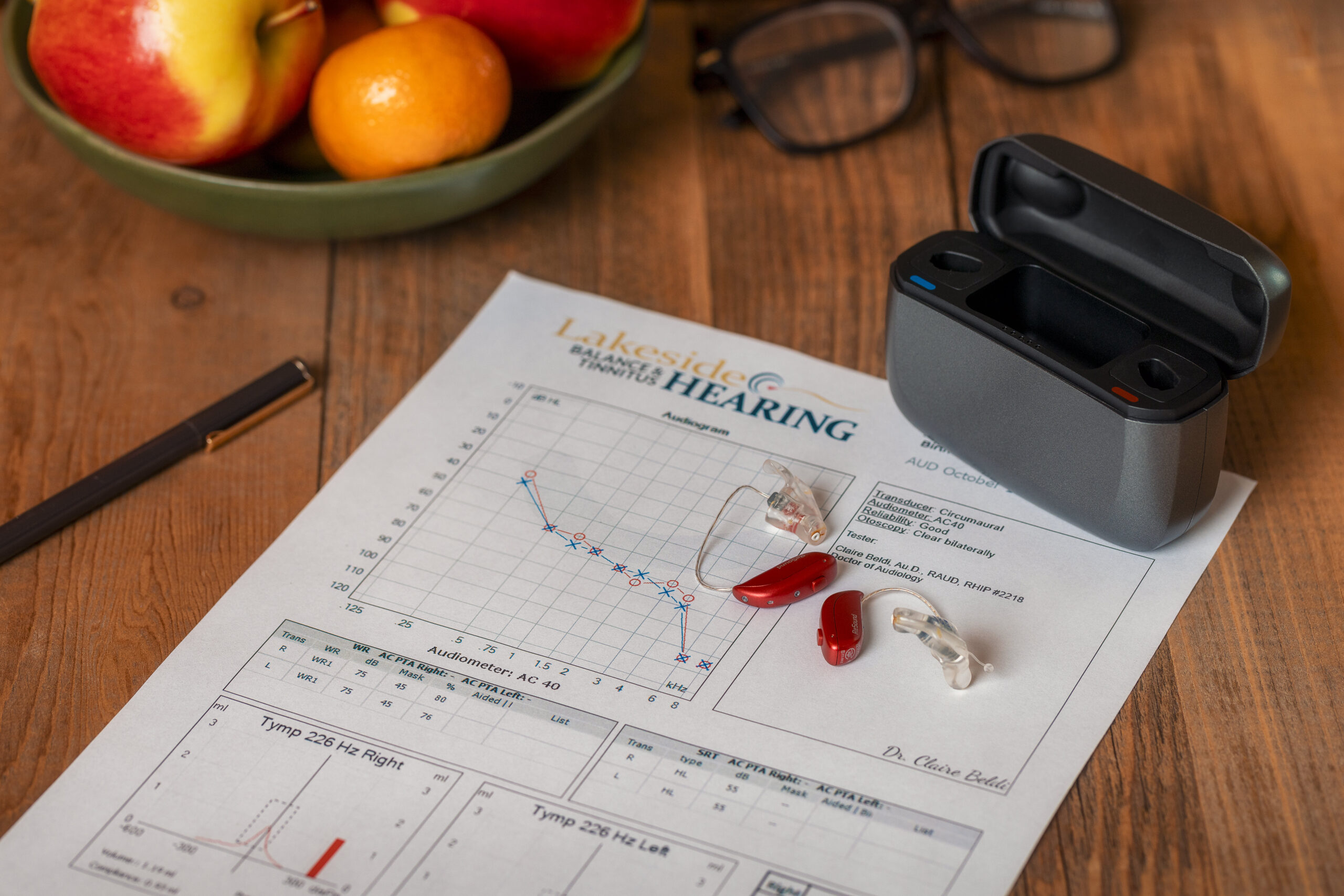
Once the testing is finished, your audiologist should sit down with you and explain what they found. This is where the different parts of the assessment come together.
You’ll likely look at your audiogram first. Your audiologist can show you where your hearing falls across different pitches, whether both ears are hearing similarly, and how much sound you need before you begin to hear at each frequency.
You may hear your hearing described as mild, moderate, moderately severe, severe, or profound. These terms describe the degree of hearing loss based on your hearing thresholds. Your results may also vary across the audiogram, so you could have relatively good hearing at some pitches and more hearing loss at others.
That pattern can help explain what you’ve been noticing.
If your hearing has changed mainly in the higher frequencies, for example, voices may still be easy to hear while some of the detail within speech becomes harder to catch. Words can start running together. Certain consonants are easier to miss. You may find yourself saying, “I can hear you talking, I just can’t make out what you’re saying.”
Your audiologist should also explain the type of hearing loss the testing suggests.
- Conductive hearing loss involves the outer or middle ear and affects the way sound reaches the inner ear.
- Sensorineural hearing loss involves the inner ear or auditory nerve pathway. Mixed hearing loss includes elements of both. Your air-conduction and bone-conduction results help the audiologist understand which pattern is present.
Then there is speech.
Your speech testing can show how well you recognize words once they are loud enough for you to hear. If speech-in-noise testing was included, you may also learn how much harder understanding becomes when competing sound is added.
This is often where the results start connecting very directly with everyday life. You may do well with one person in a quiet room and need considerably more help separating speech from background sound in a restaurant or family gathering. Your word recognition results may help explain why turning up the volume doesn’t always make every word clearer.
Your audiologist will also look at the relationship between your two ears. Small differences can occur, while a more significant or unexplained asymmetry may deserve closer attention. If the results suggest that medical evaluation or additional testing would be appropriate, they should explain what they found and why they are recommending follow-up.
By the end of this conversation, you should have answers to some fairly practical questions:
- What kind of hearing loss do I have?
- Which sounds are hardest for me to hear?
- How well am I understanding speech? Are my ears performing similarly?
- Do these results make sense alongside what I’ve been experiencing?
- Is there anything that needs further investigation?
- And what are my options from here?
By the end of the appointment, you should understand what the testing found, how it helps explain the hearing difficulties you’ve been noticing, and what options are available from here.
How Long Does a Hearing Test Take?
The length of a hearing test depends on the type of assessment being completed and which tests are needed. A comprehensive adult hearing assessment often includes a conversation about your hearing history, an examination of your ears, tone testing, speech testing and other measures based on your results.
Your appointment may take longer if additional testing is needed, if you already wear hearing aids, or if your clinician needs to investigate a particular finding more closely.
When booking, ask how much time has been set aside for the assessment. A thorough appointment should leave enough time for testing and for your audiologist to explain what the results mean.